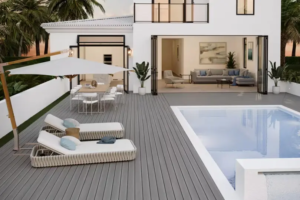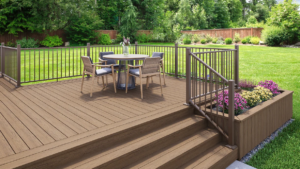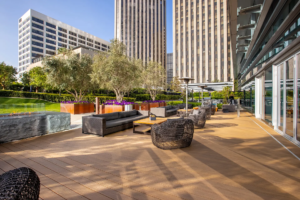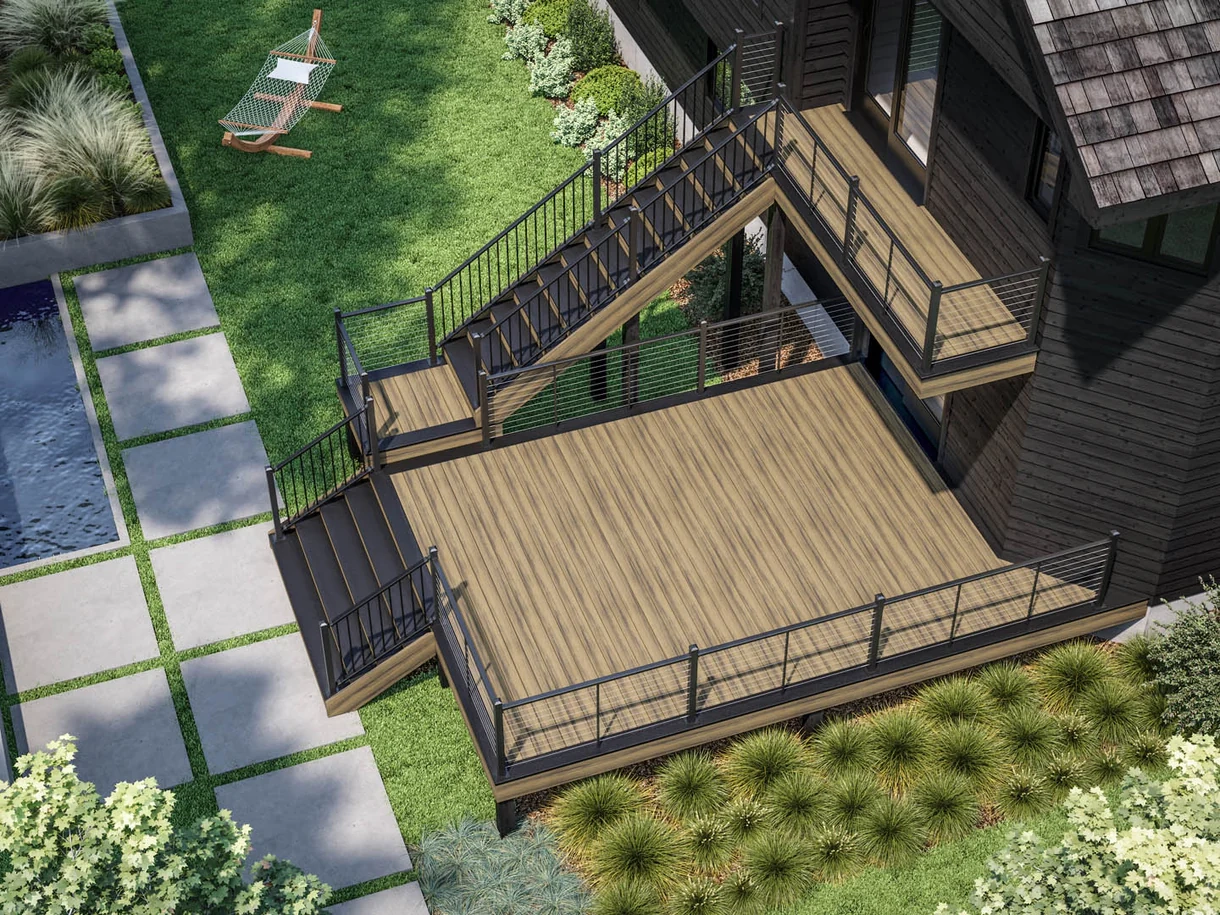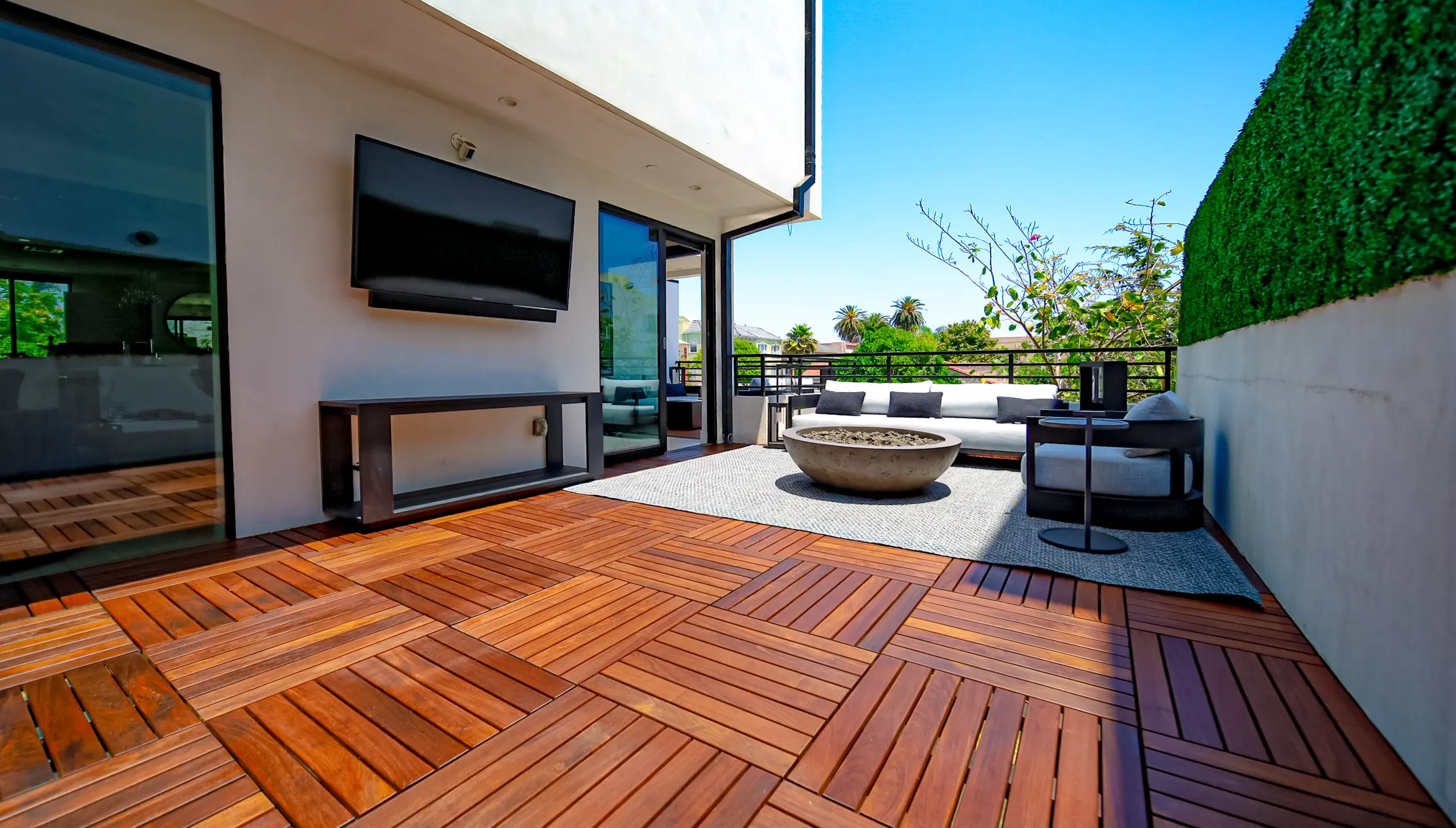
PVC (polyvinyl chloride) decking and composite decking have gained popularity due to their long-lasting performance and minimal upkeep. Unlike traditional wood, these materials resist rot, fading, moisture damage, and insect activity, making them ideal for outdoor environments.
PVC Decking:
PVC decking requires virtually no maintenance. It does not need staining, sealing, or painting and cleans easily with soap and water.
Composite Decking:
Composite decking also offers low maintenance but may require occasional scrubbing to prevent mold or mildew buildup, especially in shaded or damp areas.
PVC Decking:
PVC decking typically has a higher upfront cost. However, its long lifespan and minimal maintenance often make it more cost-effective over time.
Composite Decking:
Composite decking is generally more affordable initially, making it a popular choice for budget-conscious projects while still offering durability and visual appeal.
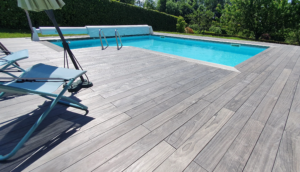
PVC Decking:
Modern PVC decking is available in a wide range of colors and realistic wood-grain textures. Brands like TimberTech offer advanced designs that closely resemble natural wood.
Composite Decking:
Composite decking provides extensive design flexibility, with many color options and surface textures suitable for various architectural styles.
PVC Decking:
PVC is fully synthetic, which raises environmental concerns. However, some manufacturers now incorporate recycled materials to reduce environmental impact.
Composite Decking:
Composite decking often uses recycled wood fibers and plastics. While considered eco-friendlier during production, composite boards are not recyclable at the end of their life cycle, contributing to landfill waste.
PVC Decking:
PVC decking offers superior resistance to moisture, rot, insects, and mildew. It is ideal for humid climates or poolside applications and can last 50 years or more.
Composite Decking:
Composite decking is highly durable but typically has a shorter lifespan of 25–30 years. Capped composite boards provide enhanced moisture resistance compared to uncapped options.
When comparing PVC vs composite decking, it’s important to note that traditional softwoods like pine, cedar, and redwood differ significantly from tropical hardwoods like ipe and cumaru. Tropical hardwoods are naturally dense, decay-resistant, and long-lasting, but require specialized installation and maintenance.
Choose PVC decking for maximum durability, minimal maintenance, and long-term performance in wet or humid environments.
Choose composite decking if you prefer a lower upfront cost, wood-like appearance, and materials made with recycled content.
The best choice between PVC vs composite decking ultimately depends on your climate, budget, and design goals.