Thermally Modified Ayous Wood: A Modern Siding and Ceiling Material for Los Angeles Projects

Across Los Angeles, architects, designers, contractors, and homeowners are looking for wood siding and cladding that delivers a warm, natural look without the warping, cupping, and constant upkeep of traditional lumber. One material that keeps coming up is thermally modified Ayous wood. At Beyond Lumber LA, we see growing interest in thermally modified wood for exterior siding, soffits, ceilings, screens, and accent walls on modern residential and commercial projects.

Below, we explain what thermally modified Ayous is, how thermal modification works, how it compares to cedar and Ipe, and where it performs best in Southern California.

What Is Ayous Wood?

Ayous (Triplochiton scleroxylon), also known as Obeche or Samba, is a lightweight tropical hardwood from West Africa. Ayous trees grow tall and straight, producing long, clear boards that are virtually knot-free. On its own, Ayous is soft and light. Thermal modification is what turns it into a stable, durable exterior wood.

What Is Thermally Modified Wood?

Thermally modified wood, sometimes called thermowood, is lumber that has been heated to very high temperatures in a controlled, low-oxygen environment using only heat and steam, with no chemicals. This process changes the wood’s cellular structure, removing the sugars that feed rot and reducing the wood’s ability to absorb moisture.

The result is wood that is more dimensionally stable, more resistant to decay, and darker in color throughout the entire board. Thermally modified Ayous typically takes on a rich caramel to amber color that many people compare to cedar, teak, or mahogany.

Why Thermally Modified Ayous Is Gaining Popularity

Outstanding Dimensional Stability

Thermal modification dramatically reduces how much wood swells and shrinks with changes in humidity. Manufacturer data for thermally modified Ayous lists radial and tangential shrinkage under 1%. For Los Angeles projects that see dry Santa Ana winds, coastal marine layer, and strong sun, that stability means fewer gaps, less cupping, and cleaner lines over time.

Clear, Knot-Free Appearance

Because Ayous grows tall and straight, boards are typically clear and free of knots. This creates the clean, uniform, high-end look that modern architecture calls for, whether on horizontal siding, vertical cladding, or slatted ceilings.
Lightweight and Easy to Work With
Thermally modified Ayous has a density of roughly 320 kg/m³, making it far lighter than dense hardwoods like Ipe. It cuts and machines easily with standard woodworking tools and can be milled into shiplap, tongue-and-groove, rainscreen, and custom profiles. That makes it a great fit for overhead applications like soffits, porte-cochères, and covered patio ceilings.

Chemical-Free and Sustainable

Thermal modification uses only heat and steam, so the finished product contains no added chemical preservatives. Many thermally modified Ayous products are also sourced with FSC or PEFC chain-of-custody certification, which is important for green building and sustainable design projects.
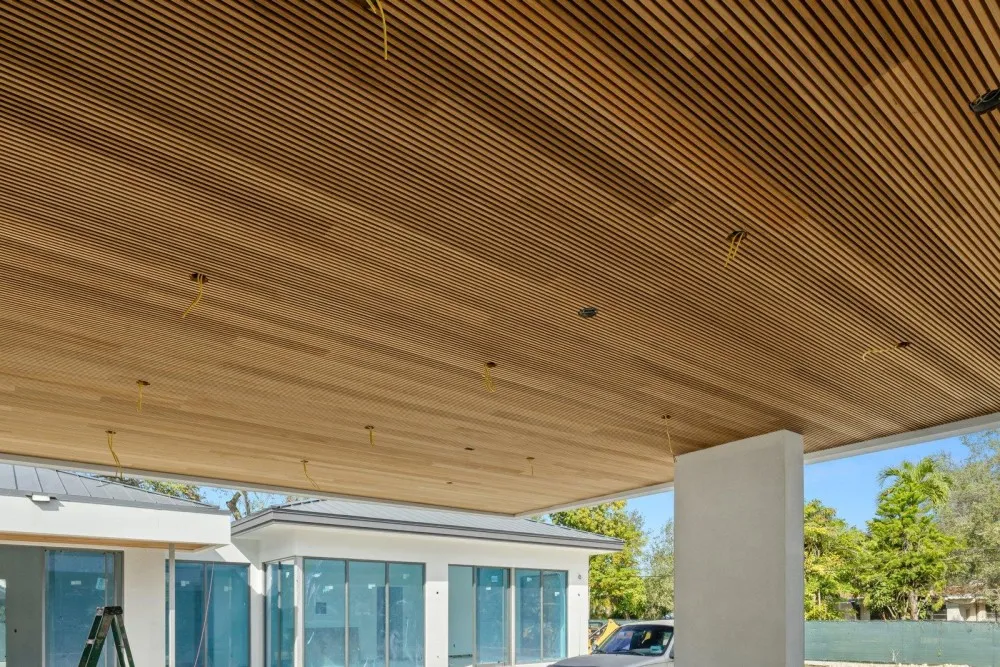
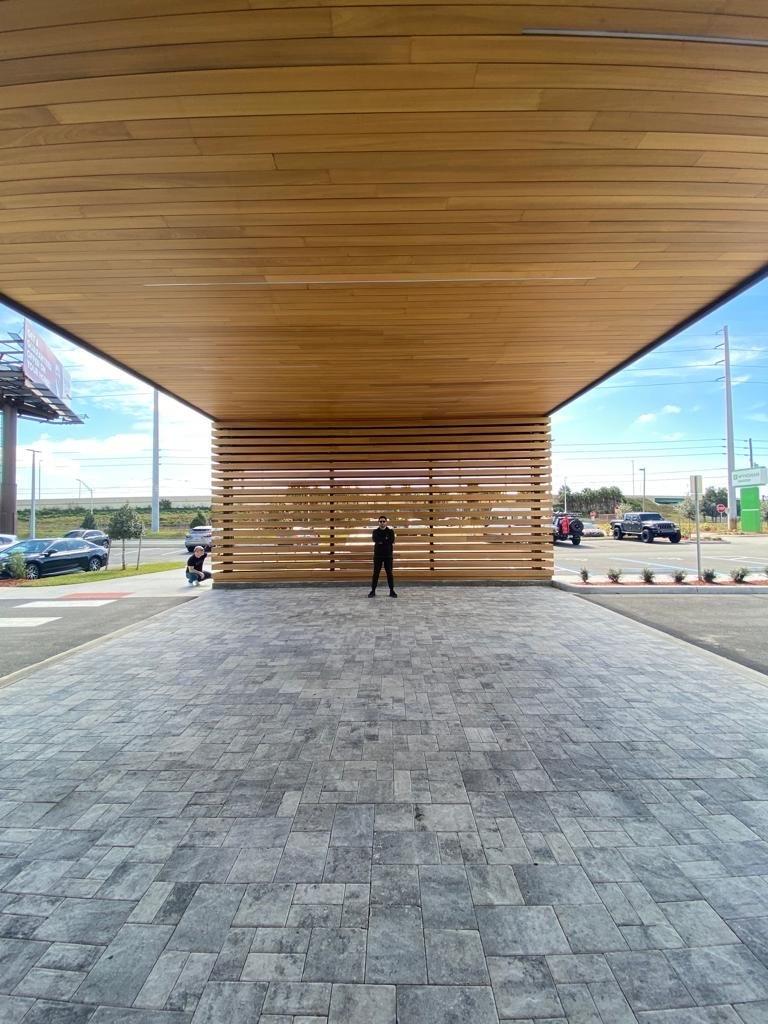
Slatted thermally modified Ayous ceiling on a covered outdoor space: linear texture and consistent color across a large overhead area.

Thermally Modified Ayous vs. Cedar vs. Ipe Siding

Here’s how thermally modified Ayous compares to two other popular wood siding and cladding options for Los Angeles projects:
FeatureThermally Modified AyousWestern Red CedarIpe
AppearanceClear, knot-free, caramel to amberVaries by grade; knots in lower gradesDeep reddish-brown, varied grain
Weight / densityVery light (~320 kg/m³)LightVery heavy (~1,050 kg/m³)
Dimensional stabilityExcellent (<1% shrinkage)GoodVery good
TreatmentHeat and steam only; no chemicalsNatural; no treatmentNatural; no treatment
Best usesSiding, soffits, ceilings, screens, interior wallsSiding, fences, trimDecking, siding, fences, high-wear areas
Not recommended forDecking or high-impact areas (soft surface)High-wear surfacesOverhead/lightweight applications
Finish / maintenanceUV oil every 2–5 years, or let it silverRegular sealing or stainingOil to keep color, or let it silver

Specifications are typical manufacturer and industry values and can vary by product and supplier.

Materials and Performance Considerations

Like most natural wood, thermally modified Ayous will weather to a silver-gray patina if left unfinished in direct sunlight. To maintain its warm caramel color, a UV-resistant penetrating oil or stain is typically recommended every two to five years, depending on sun exposure. For Los Angeles projects with full southern or western exposure, planning a finish schedule from the start is a smart move.

Because thermal modification makes wood slightly more brittle, installers should pre-drill near board ends and use stainless steel fasteners. For exterior siding, installing over a rainscreen with a ventilation gap helps airflow and drainage and supports long-term performance. Thermally modified Ayous is also a relatively soft wood, so it’s best suited to vertical and overhead applications rather than walking surfaces.

Where Thermally Modified Ayous Works Best

  • Exterior wood siding and cladding on modern homes
  • Soffits, eaves, and covered patio ceilings
  • Porte-cochères, entry canopies, and commercial overhangs
  • Slatted privacy screens and architectural feature walls
  • Garage door cladding and accent panels
  • Interior wood wall panels and ceilings

Thoughts from Beyond Lumber LA

Thermally modified Ayous offers a rare combination of natural beauty, dimensional stability, light weight, and chemical-free durability. Its clear, warm appearance makes it a favorite for modern siding, soffits, and ceilings across Los Angeles residential and commercial projects.

At Beyond Lumber LA, we work closely with homeowners, contractors, architects, and designers to source thermally modified wood, exterior siding, cladding, and architectural lumber that performs well in Southern California conditions. If you’re planning a siding, ceiling, or cladding project in Los Angeles or the surrounding areas, visit Beyond Lumber LA or contact our team for expert guidance on materials, profiles, and finishing.

Frequently Asked Questions

Thermally modified Ayous is a West African hardwood that has been heated with steam at high temperatures, without chemicals, to improve its stability, rot resistance, and color. It is widely used for exterior siding, cladding, soffits, and ceilings.

Yes. Thermally modified wood is one of the most stable wood siding options available. It resists swelling, shrinking, and decay, making it well suited to exterior cladding in sunny, dry climates like Los Angeles.

Yes. Left unfinished in sunlight, thermally modified Ayous will weather to a silver-gray patina. Applying a UV-resistant oil or stain every two to five years helps keep its original caramel color.

Thermally modified Ayous is a relatively soft, lightweight wood, so it is generally recommended for siding, ceilings, soffits, and screens rather than decking. For decks, denser hardwoods like Ipe or Cumaru are usually a better fit.

Both are lightweight and attractive, but thermally modified Ayous offers greater dimensional stability and a more consistent, knot-free appearance. Cedar has a more varied grain and may include knots depending on the grade.

Thermally modified wood is treated using only heat and steam, with no added chemicals. Many products are also sourced with FSC or PEFC certification, making thermally modified wood a popular choice for sustainable and green building projects.

Beyond Lumber LA works with contractors, designers, and homeowners to source thermally modified wood siding, cladding, and ceiling materials for projects throughout Los Angeles and Southern California.

people also liked

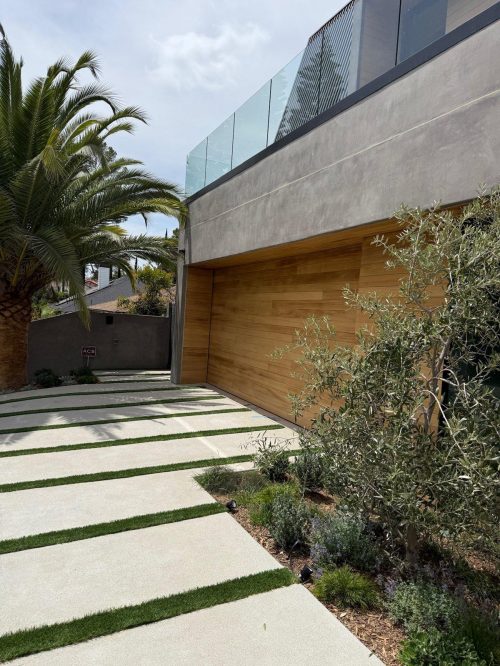
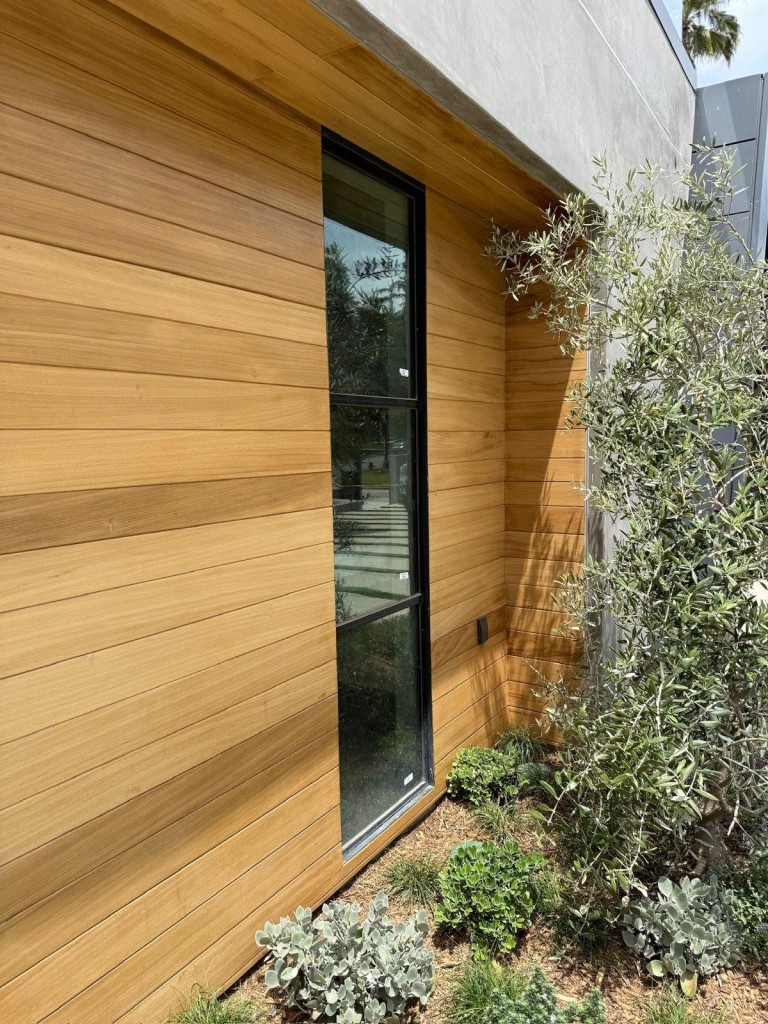
Thermally modified Ayous cladding wraps a modern garage façade: clean horizontal lines and a warm caramel tone against smooth plaster.
Across Los Angeles, architects, designers, contractors, and homeowners are looking for wood siding and cladding that delivers a warm, natural...
4-Mistakes-to-Avoid-When-Ordering-Decking-Materials-for-Your-Next-Project
Planning a New Deck? Don’t Let Material Mistakes Delay Your Project A successful decking project starts long before the first...
Accoya Wood The High-Performance Choice for Decking, Siding & Outdoor Projects
When choosing wood for an exterior project, appearance is only part of the equation. Decking, siding, soffits, fencing, and architectural...
Why Homeowners Choose Beyond Lumber for NewTechWood Composite Decking & Siding
If you’re looking for a modern, low-maintenance alternative to traditional wood, NewTechWood has quickly become one of the most trusted...
Why the Right Decking Material Matters From the Beginning
A high-performing outdoor space starts with more than great design. It starts with choosing the right materials.No matter how well...
Ash Wood Decking & Siding The Modern Hardwood Builders Are Choosing
As modern architecture continues to dominate residential and commercial design across California, more builders, architects, and homeowners are turning to...